
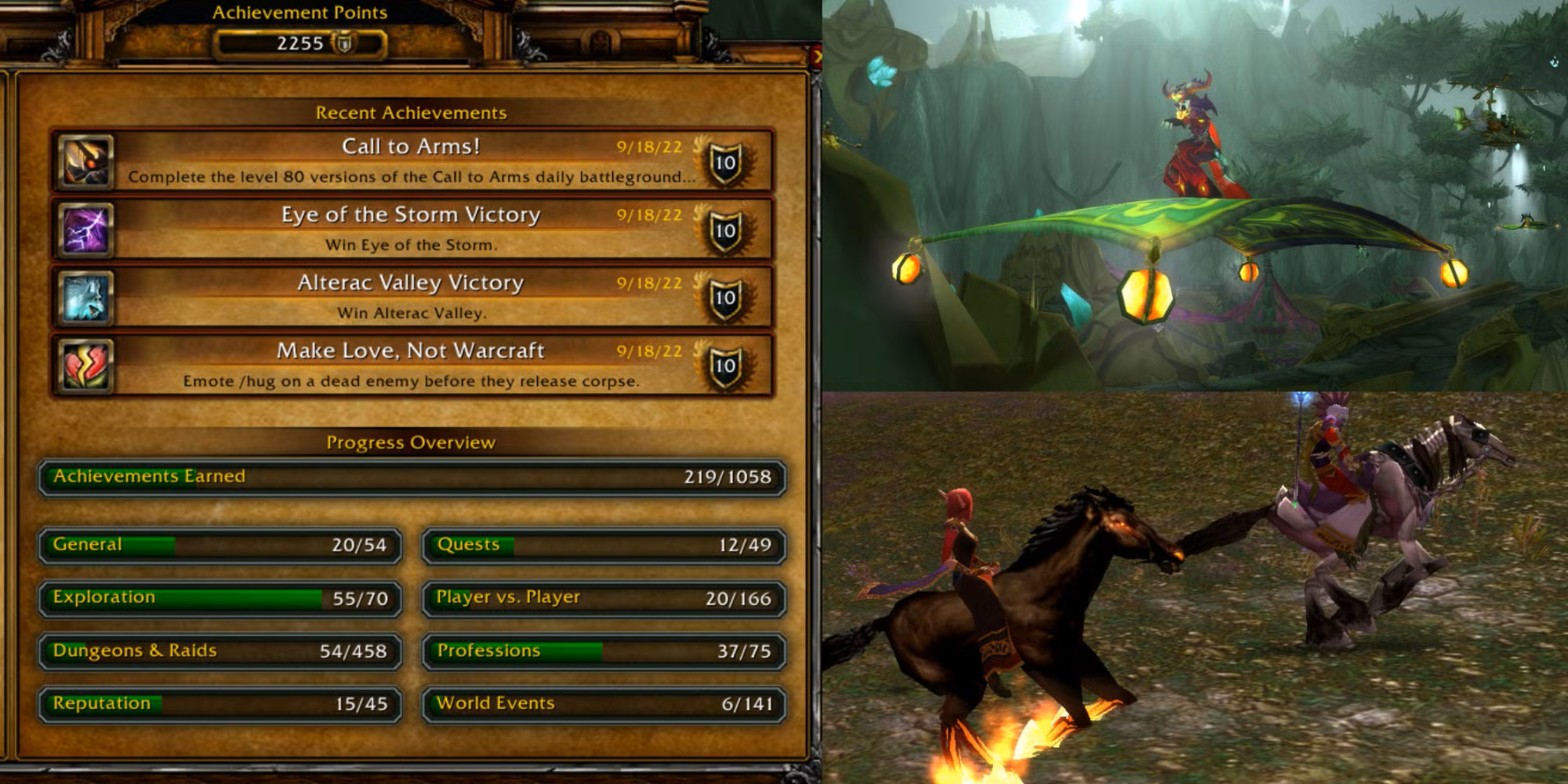
Nobody asks for your resume in a raid group.
In World of Warcraft, you join a 40-person raid[*] and the only thing that matters is your track record. Your gear, your achievements, your history. All public, all earned, all permanently tied to your character. You tanked Ragnaros and 39 people watched it happen. That’s not a claim on your profile. That’s a fact the system recorded.
You leave your guild? Your achievements come with you. The guild disbands? Doesn’t matter. Your record exists independent of any single group, server, or context.
Now open LinkedIn.
You wrote your own job descriptions. You endorsed people you’ve never actually worked with. Your “skills” section is a popularity contest with no verification mechanism. And here’s the part that should bother you: if LinkedIn disappears tomorrow, so does everything you’ve built on it.
LinkedIn is an identity platform pretending to be a reputation system. Gaming built actual reputation systems twenty years ago and never bothered to call them that.
The entire credentialing industry got stuck on the wrong question. “How do we prove who people are?” Billions of dollars. Decentralized identifiers. Self-sovereign identity frameworks. Cryptographic anchors that prove, with mathematical certainty, that you exist and you control your own keys.
Great. You exist.
But can you ship production code under pressure? Can you manage a supply chain audit across three countries? Did you actually complete that clinical rotation, or did you just say you did?
A DID tells me nothing about any of that. It answers “who are you?” and stops. It’s the foundation of a building where nobody moved in upstairs.
When a nurse transfers between hospitals, her identity was never the question. Her 2,400 clinical hours, her ICU certification, her medication administration record. Those are the question. When a developer applies to your team, you don’t doubt he exists. You doubt whether the Syngenta supply chain certification on his profile is real, current, and something he can actually perform against.
The bottleneck is never “who is this person.” It’s “what has this person done, and can I verify it without making five phone calls?”
Identity is solved. Reputation is broken.
Here’s what breaks the pattern: go back to the raid group.
Reputation there works because it’s earned through action. The boss dies or it doesn’t. There’s no self-reporting. It’s verified by the people who were present. It’s portable, following the character and not the guild. And it persists. Achievements don’t vanish when circumstances change.
Now look at what 50 million professionals are using instead. Credly issues digital badges you can share on LinkedIn, embed on your website, post wherever you want. Sounds like portability. It isn’t. Every badge verification resolves back to Credly’s servers. Credly goes down, your credential is a dead link. You shared it everywhere, but you never owned it. That’s shareability dressed up as sovereignty.
The gap between what gaming figured out in 2004 and what the professional world runs on in 2026 is staggering. And the Web3 identity movement (DIDs, verifiable credentials frameworks, all of it) mostly widened that gap by building more sophisticated answers to the wrong question.
Andamio doesn’t start with “verify your identity.” It starts with “do the work.”
You connect a wallet. You get an Access Token. You exist in the system. Fine. That’s the boring part. Five seconds, handled, move on.
The interesting part is what happens after. You complete a course module. A teacher, a human who actually reviewed your work, approves it. That approval is an on-chain transaction on Cardano. Not a database entry someone can edit. Not a PDF in an inbox. A permanent, cryptographically verifiable record that you hold in your wallet.
You contribute to a project. A manager evaluates your deliverable. Same thing. Another credential. Another piece of portable proof that you did the work and someone qualified confirmed it.
The credentials work the same way whether they came from a neighborhood coding school in Nairobi or a supply chain program through Syngenta. The protocol doesn’t care about the size of the organization. It cares that the work happened and was verified. That’s the whole point of infrastructure versus platform. A platform asks “who are you?” once and calls it done. Infrastructure keeps asking “what have you proven?” and makes every answer portable.
1.57 billion independent workers globally. Nearly half the workforce. Flexible work growing at 15% annually, double the rate of traditional employment.
These people have no institutional home for their credentials. Every new contract is a cold start. Every new client means re-proving qualifications from scratch. The professional world built its credential systems for people who stay at one company for a decade, and then watched half the workforce leave.
That’s what Andamio was built for. The thesis hasn’t changed: credentials should belong to the person who earned them. Andamio partnerships across governance, education, sports, agriculture, and supply chain aren’t a pivot. They’re validation. The same protocol that credentials a farmer in sustainable practices credentials a developer in smart contract auditing. Different context. Same verification architecture. That’s what infrastructure looks like.
The question used to be “who are you?” It was always the wrong question. The right one is “what have you proven?” And whether the answer follows you.
First in a series on the ideas behind portable professional identity. Next up: how the Cardano ecosystem accidentally invented modern hiring.
[*] Large team of players (typically 10, 25, or 40 people) who coordinate to defeat high-difficulty boss encounters that no single player or small group can handle. Each person has a specific role: tanks absorb damage, healers keep people alive, DPS (damage dealers) kill the boss. Everyone’s performance is visible in real time. Raid groups are a real-world example of reputation-based team formation at scale. Nobody submits a resume. The group inspects your gear (evidence of past achievements), checks your achievement log (verifiable history), and evaluates your performance live. Trust is built through demonstrated action, not credentials on paper.
Questions? Feedback? Let us know in the
#ask-for-helpor#feedback channelsof our Andamio Network discord serverSay hello: hello@andamio.io
Follow us: X: @andamio_teams Linkedin: @andamio